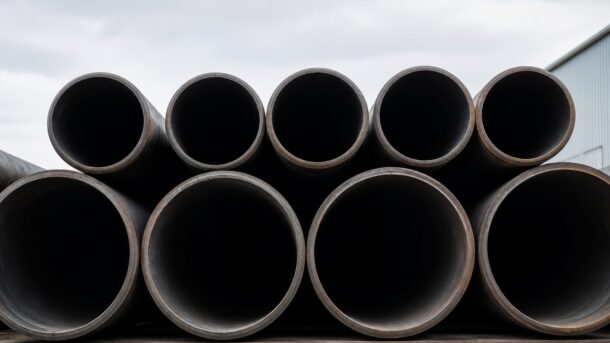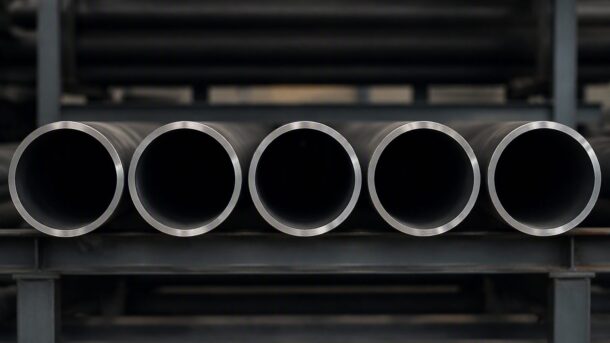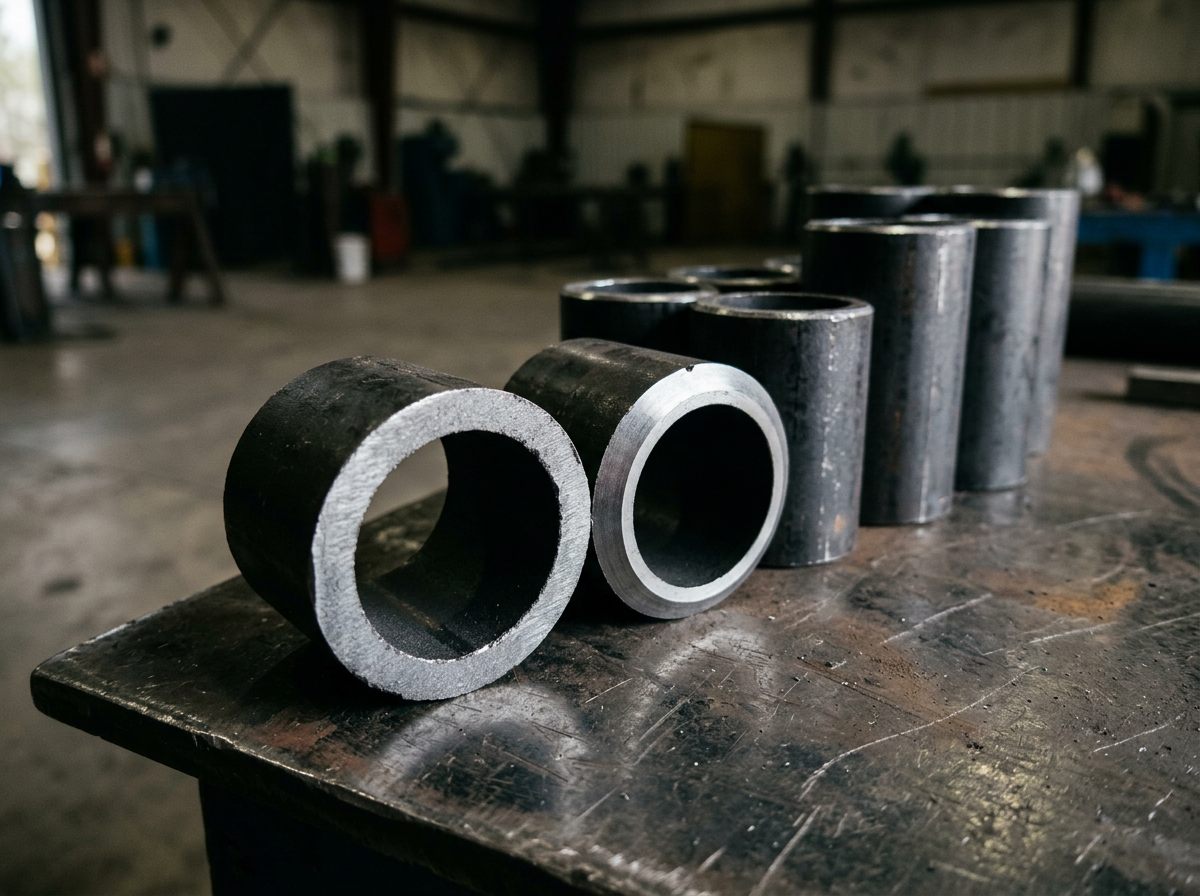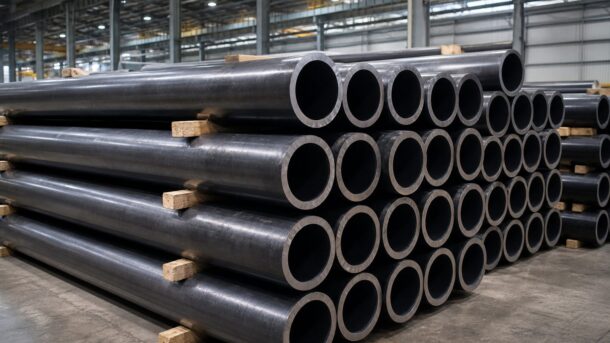
In commercial piping procurement, few designations generate as much confusion—and as many expensive specification errors—as ASTM A53 and ASTM A106. On paper, both specifications govern black and hot-dipped galvanized carbon steel pipe. Both cover common nominal pipe sizes from 1/8 inch through 26 inches, and both frequently share identical Grade B yield and tensile minimums.
Yet substituting one for the other without understanding the governing engineering codes is one of the fastest ways to fail a third-party refinery inspection or introduce catastrophic failure into a high-temperature steam line. ASTM A106 is exclusively a seamless specification engineered for high-temperature, high-pressure duty. ASTM A53 is a general-purpose standard covering seamless, electric-resistance welded (ERW), and furnace-butt welded pipe for mechanical, structural, and low-to-medium pressure applications.
This guide provides a comprehensive, field-tested technical breakdown of ASTM A53 versus ASTM A106, analyzing metallurgy, manufacturing routes, ASME code restrictions, and how dual-certified pipe fits into commercial procurement.
Key facts at a glance
- Manufacturing exclusivity: ASTM A106 pipe is strictly manufactured via the seamless route (Type S). ASTM A53 includes seamless (Type S), electric-resistance welded (Type E), and continuous furnace-welded (Type F).
- Service temperature scope: ASTM A106 is purpose-engineered for high-temperature service (often rated up to 750°F / 400°C and beyond in ASME power piping). ASTM A53 is intended for structural, mechanical, and moderate temperature fluid transport.
- Silicon deoxidation: ASTM A106 Grade B mandates a minimum silicon content of 0.10% for complete “killing” (deoxidation), enhancing creep resistance under sustained thermal stress. ASTM A53 does not specify a minimum silicon threshold.
- ASME B31 Code compliance: Under ASME B31.1 (Power Piping) and ASME B31.3 (Process Piping), A53 Type E welded pipe requires a weld joint efficiency factor (E = 0.85), demanding thicker walls compared to 100% seamless A106 (E = 1.00) at identical design pressures.
- Dual-certified pipe (A53-B / A106-B): When a seamless heat satisfies both the tighter chemistry of A106 (silicon, carbon maximums) and the mechanical/testing requirements of A53, mills routinely stamp it as dual-certified. Welded A53 pipe can never be certified to A106.
Scope and manufacturing types: where the specifications diverge
To evaluate which specification fits your bill of materials, you must first inspect how each standard defines its manufacturing routes.
ASTM A53: The general-purpose workhorse
ASTM A53 (Standard Specification for Pipe, Steel, Black and Hot-Dipped, Zinc-Coated, Welded and Seamless) covers steel pipe intended for coiling, bending, flanging, and general fluid conveyance (water, steam, gas, air) as well as structural columns and racking.
A53 divides into three distinct manufacturing types and two mechanical grades:
- Type F (Furnace-Butt Welded, Continuous Welded): Produced only in Grade A. It carries the lowest strength and lowest pressure rating, commonly used for low-pressure domestic water or fencing.
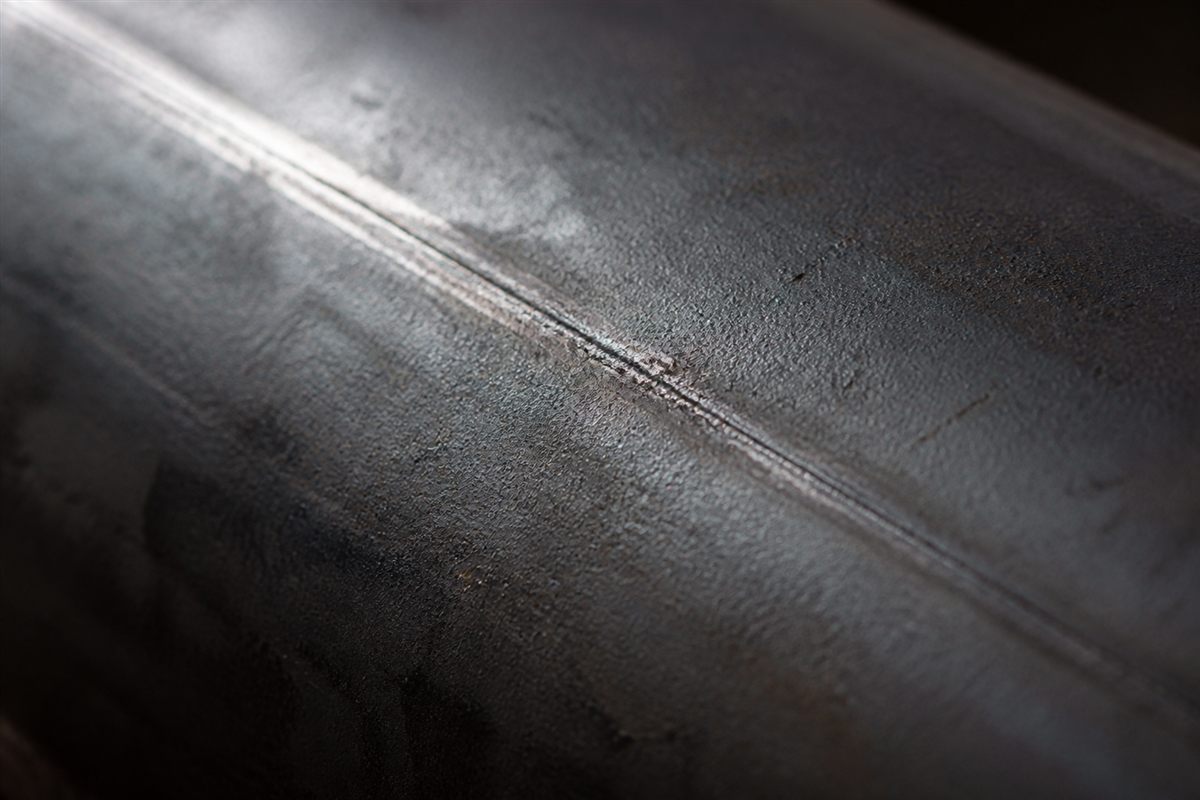
- Type E (Electric-Resistance Welded – ERW): Produced in Grade A and Grade B. Coiled strip is roll-formed and joined by high-frequency electric resistance welding without filler metal. Type E represents the vast majority of commercial A53 inventory.
- Type S (Seamless): Produced in Grade A and Grade B via rotary piercing and rolling of solid billets, carrying no longitudinal weld.
As explored in our comprehensive breakdown of ERW vs Seamless vs LSAW steel pipe, the manufacturing process dictates wall uniformity, lead times, and per-ton procurement costs.
ASTM A106: The high-temperature pressure standard
ASTM A106 (Standard Specification for Seamless Carbon Steel Pipe for High-Temperature Service) covers exclusively seamless carbon steel pipe for service in power stations, oil refineries, petrochemical complexes, industrial boiler systems, and process lines operating under elevated temperatures and pressures.
A106 is categorized into three progressive grades:
- Grade A: Lower carbon content (0.25% max), lowest tensile strength, optimized for severe cold bending and close coiling.
- Grade B: The universal industry default, balancing weldability, high tensile strength (60,000 psi / 415 MPa min), and elevated-temperature creep resistance.
- Grade C: Higher carbon (0.35% max) and manganese, delivering higher yield and tensile strength (70,000 psi / 485 MPa min) but requiring strict preheat procedures during field welding.
Chemical composition and mechanical properties compared
The chemical differences between A53 Grade B and A106 Grade B appear subtle on a mill test certificate, but they translate into critical metallurgical differences under heat.
| Chemical & Mechanical Property | ASTM A53 Grade B (Seamless / ERW) | ASTM A106 Grade B (Seamless Only) | Engineering Significance |
|---|---|---|---|
| Carbon (C), max % | 0.30% | 0.30% | Controls base metal hardness and weldability |
| Manganese (Mn), % | 1.20% max | 0.29% – 1.06% | Enhances tensile strength and hot workability |
| Phosphorus (P), max % | 0.05% | 0.035% | Lower limits in A106 prevent embrittlement |
| Sulfur (S), max % | 0.045% | 0.035% | Stricter limits in A106 improve hot ductility and weld integrity |
| Silicon (Si), min % | Not specified | 0.10% min | Essential deoxidizing agent; prevents high-temperature graphitization |
| Copper (Cu), max % | 0.40% | 0.40% | Residual element limit |
| Nickel (Ni), max % | 0.40% | 0.40% | Residual element limit |
| Chromium (Cr), max % | 0.40% | 0.40% | Residual element limit |
| Molybdenum (Mo), max % | 0.15% | 0.15% | Residual element limit |
| Vanadium (V), max % | 0.08% | 0.08% | Residual element limit |
| Minimum Yield Strength | 35,000 psi (240 MPa) | 35,000 psi (240 MPa) | Baseline elastic load capacity |
| Minimum Tensile Strength | 60,000 psi (415 MPa) | 60,000 psi (415 MPa) | Baseline ultimate structural strength |
| Tensile Ratio / PSL System | General structural / fluid limits | Strict high-temp limits | Similar to principles detailed in our API 5L Grade B to X70 guide |
Why the silicon minimum matters in A106
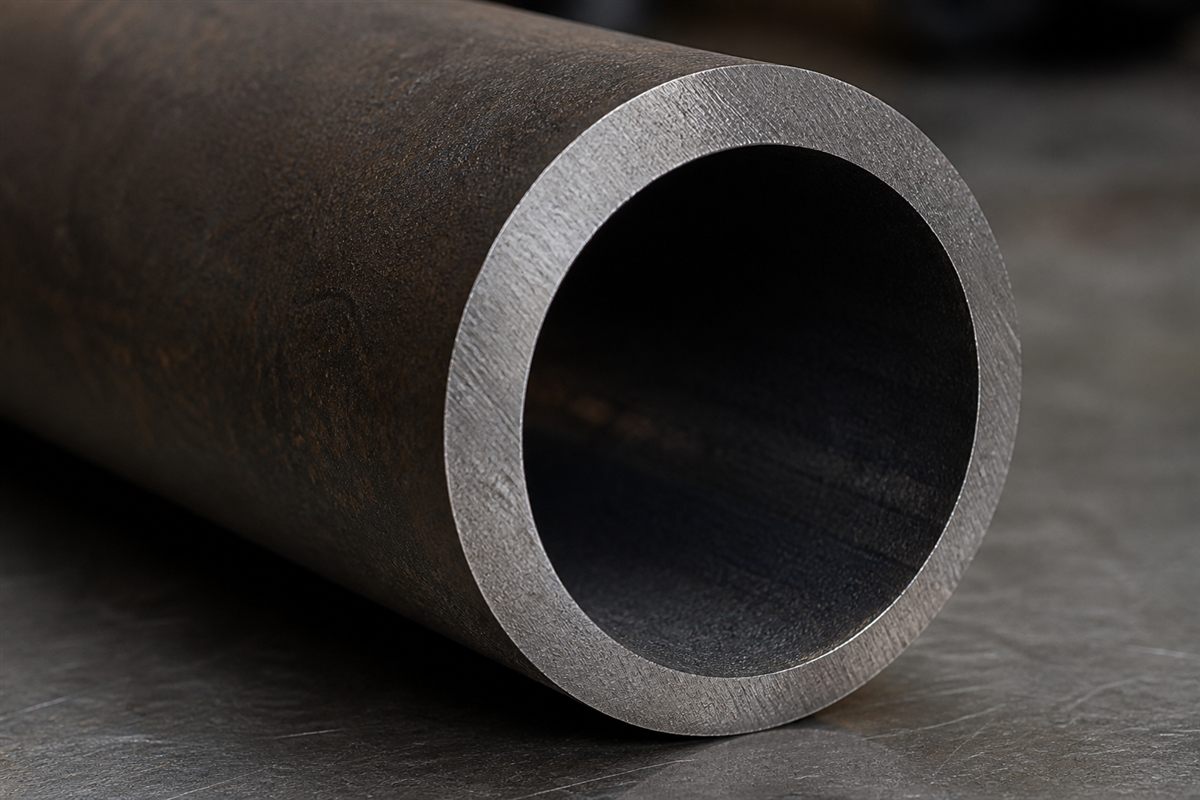
The presence of at least 0.10% Silicon (typically 0.10% to 0.40%) in A106 Grade B is the defining metallurgical difference. During steelmaking, silicon acts as a powerful deoxidizing agent, producing “fully killed steel.”
In unkilled or semi-killed steels, dissolved oxygen reacts with carbon at temperatures above 700°F (370°C), precipitating carbon out of solution into micro-pockets of graphite—a phenomenon known as graphitization. Graphitization severely degrades steel ductility, leading to catastrophic brittle fractures in high-temperature steam lines. By deoxidizing the melt, A106 guarantees thermal stability that unkilled A53 pipe cannot deliver.
Hydrostatic and non-destructive testing requirements
Quality control and inspection regimes differ significantly across both specifications, reflecting their intended operating risks:
1. Hydrostatic pressure testing
- ASTM A53: Every length of A53 pipe (whether Type S, Type E, or Type F) must undergo factory hydrostatic testing at designated pressures maintained for not less than 5 seconds. Alternatively, mills may substitute non-destructive electric testing (eddy current or ultrasonic testing) for welded seams.
- ASTM A106: Hydrostatic testing is mandatory for all lengths, holding test pressure for a minimum of 5 seconds without leakage. The test pressure is calculated to produce a stress in the pipe wall equal to 60% of the specified minimum yield strength (SMYS). Non-destructive examination (UT or flux leakage) can be performed as an alternative or supplement when specified by purchase agreements.
2. Flattening and bend tests
- A53 Type E (ERW): Requires rigorous flattening tests on test rings cut from the crop ends of coils to verify weld ductility and ensure zero weld-line opening under plastic deformation.
- A106 (Seamless): For pipe NPS 2 and smaller, a cold bend test around a cylindrical mandrel (90° or 180° depending on diameter) is mandatory to verify ductility for field manipulation. For pipe larger than NPS 2, flattening tests verify uniform cross-sectional ductility.
Engineering codes: ASME B31.1 vs ASME B31.3 rules
The decision between A53 and A106 is rarely left to contractor preference; it is dictated by governing engineering codes. The two most common standards in commercial plant construction are ASME B31.1 (Power Piping) and ASME B31.3 (Process Piping).
1. Longitudinal joint quality factors (E)
Under ASME pressure design equations, the allowable internal design pressure P is directly proportional to the joint quality factor E.
Because A106 is seamless, its joint factor is always E = 1.00.
For A53 Type E (ERW), ASME codes assign a default joint factor of E = 0.85 (unless 100% supplemental non-destructive examination is performed).
The practical consequence: If an engineer designs a piping loop with E = 1.00 based on seamless pipe, substituting A53 Type E welded pipe reduces the calculated pressure rating by 15%, instantly violating code compliance unless wall thickness is increased.
2. Upper temperature limits
- ASTM A106 Grade B: Permitted for service up to 800°F (427°C) under ASME B31.3 with published allowable stress tables, and up to 1000°F (538°C) with appropriate derating.
- ASTM A53 Grade B (Seamless): Permitted up to 750°F (399°C).
- ASTM A53 Grade B (Type E Welded): Restricted to a maximum of 500°F (260°C) in severe cyclic service or high-temperature power piping.
Understanding dual-certified pipe: A53-B / A106-B / API 5L-B
When reviewing inventory at international master distributors, you will frequently encounter pipe stenciled with multiple overlapping specifications:
ASTM A53-B / ASTM A106-B / API 5L-B / ASME SA53-B / SA106-B (TYPE S - SEAMLESS)
How is triple/dual certification achieved?
Dual certification is not a shortcut; it is a metallurgical overlap. A modern seamless steel mill can melt a heat that simultaneously complies with:
- The silicon minimum (≥ 0.10%) and strict phosphorus/sulfur caps of ASTM A106 Grade B.
- The mechanical tensile, flattening, and hydrostatic requirements of ASTM A53 Grade B Type S.
- The PSL1 chemical and fracture toughness criteria of API 5L Grade B.
When the seamless pipe passes all applicable tests, the manufacturer is legally authorized to issue an EN 10204 Type 3.1 Mill Test Certificate listing all specifications.
Critical rule: Welded pipe can never be dual-certified to A106
Only seamless pipe (Type S) can achieve dual certification with A106. An ERW pipe (A53 Type E) can never be dual-certified to A106 under any circumstances, regardless of testing or chemical purity, because A106 strictly forbids welded seams.
Procurement decision framework: how to specify correctly
To prevent costly rework and inspection rejections, follow this 4-step decision hierarchy on every commercial order:
- Check the operating temperature:
- If operating temperatures exceed 400°F (204°C) or involve boiler external piping, specify ASTM A106 Grade B.
- If service involves ambient temperature cooling water, compressed air, fire protection, or structural columns, specify ASTM A53 Grade B Type E (ERW) for significant cost savings.
- Review the ASME joint factor (E):
- If design calculations assume E = 1.00, you must buy seamless pipe (A106-B or A53-B Type S).
- If the system allows E = 0.85, A53 Type E welded pipe will reduce material spend by 20% to 35% per ton.
- Verify the MTC paperwork:
- Every A106 order must show a verified silicon content (≥ 0.10%) and carbon equivalent (CE) calculation on the EN 10204 3.1 certificate.
- Cross-check heat numbers on the MTC against the physical stenciling on each length before offloading at the job site.
- Identify fabrication requirements:
- For tight radius bending, cold coiling, or vanstoning, choose Grade A (A106-A or A53-A) for enhanced ductility, or confirm with the mill that Grade B heats feature lower carbon ceilings.
FAQ
Can ASTM A53 Grade B be substituted for A106 Grade B?
Only if the A53 pipe is Type S (Seamless) and the mill test certificate confirms it meets the silicon minimum (≥ 0.10%) and chemical limits of A106 Grade B. A53 Type E (ERW welded) can never replace A106 in high-temperature or seamless-mandated service.
Why is ASTM A106 more expensive than A53?
A106 is exclusively seamless, requiring solid steel round billets that are pierced and hot-rolled. A53 Type E is roll-formed from continuous steel coils and high-frequency welded at high speed, resulting in significantly lower manufacturing costs and higher production volume per shift.
What does ASME SA53 and SA106 mean?
The prefix “SA” indicates that the ASTM specification has been formally reviewed, approved, and adopted by the ASME Boiler and Pressure Vessel Code committee. In modern manufacturing, SA53 and SA106 are identical in technical content to their ASTM counterparts.
Is ASTM A106 available in welded form?
No. ASTM A106 strictly prohibits weld seams. Any welded pipe claimed to be A106 is counterfeit or improperly certified.
Which specification is better for fire protection sprinkler systems?
ASTM A53 Type E (Grade A or B) is the global standard for wet and dry fire sprinkler systems under NFPA 13. A106 is unnecessary and cost-prohibitive for ambient firewater distribution.
What is the difference between Grade A and Grade B in A106?
Grade A has lower carbon (0.25% max vs 0.30%) and lower yield strength (30,000 psi vs 35,000 psi), making it more ductile for cold bending. Grade B provides higher strength (60,000 psi tensile) and is the standard default for general piping.
Does ASTM A106 require Charpy impact testing?
Standard A106 Grade B does not mandate Charpy V-notch impact testing as a baseline requirement. However, supplementary requirement S1 allows buyers to specify Charpy testing at defined low temperatures when required by project engineering specs.
How does ASTM A53/A106 compare to API 5L line pipe?
A53 and A106 are industrial plant, building service, and refinery piping specifications. API 5L is engineered specifically for long-distance cross-country oil, gas, and slurry transmission pipelines, incorporating stricter fracture toughness and carbon equivalent criteria (especially under PSL2).
Bottom line
- Specify ASTM A106 Grade B whenever your piping system handles high-temperature steam, process hydrocarbons, power plant boiler feeds, or requires a guaranteed seamless wall with a joint factor of E = 1.00.
- Specify ASTM A53 Grade B Type E (ERW) for ambient and moderate-temperature water, compressed air, HVAC loops, fire sprinkler grids, and structural framing where welded pipe delivers equal performance at 20% to 35% lower cost.
- Utilize dual-certified A53-B / A106-B Type S when you need maximum inventory flexibility across both general utility and high-temperature process specifications.
- Always demand an EN 10204 Type 3.1 Mill Test Certificate to verify silicon content, manufacturing route, and hydrostatic test pressures before releasing pipe to fabrication.
For more technical guidance on carbon steel pipe schedules, wall thickness calculations, and international testing standards, explore our comprehensive articles in the Steel Pipe Guide library.